Atheism 2.0

Rainbow Thoughts

An Encounter to Remember

Alain de Botton and I first met when I was 19 years old, between the covers of his first book, Essays in Love. Back in those days, we were both preoccupied with love. Between us, we would desperately try to define it, conjure it and acquire it. We would spend most of our time thinking about love, the only difference being he would write about it and I would read about it.

Ageing Curiosity

As time passed, we both grew up but we never grew apart. It seems that our mutual interests merely evolved with time. We continued to analyse the nuts and bolts of the body, mind and spirit of life, ranging from how Proust can change one’s life to the art of travel. As he continued to write, I would continue to read, nibbling on madeleines and sipping tea while dreaming of far off places.

Friends Re-united

Eventually our writer-reader relationship got buried by the sands of time until last Sunday. Imagine my surprise when we met up again, this time on ted.com, both in search of the missing pieces in secular life.

In search of Morality, Guidance and Consolation

I’m of course talking about what Alain refers to as Atheism 2.0, a flavour of atheism that takes the bits and pieces of religion (such as singing Christmas carols and visiting churches) that we enjoy to make our existence more complete, from daring to ask questions about life’s bigger mysteries (life’s purpose, death and disappointment) to creating connections (building communities and developing an attitude of service towards others).

I urge you to listen Alain’s Ted talk here. It really made me think.

Making Vital Things Matter More

As you stand by the water cooler today, looking out the window, ask yourself these three vital questions: Why am I here? How can I make things better? How can I make what we do together matter more?

And if you’re feeling courageous or simply playful, try asking these questions out loud and see where the conversation takes you, for it is in the search for answers that we find responses through our questionings.

And who knows? You may discover a pot of goodies at the end of the rainbow or tumble down a rabbit hole and have a tea party!

Moody Blues

Dear Reader, my apologies for not writing sooner. The fact is, I’ve gone into hibernation mode. Caught in a week-day routine of getting up before dark and returning home in the dark is enough to send anyone to sleep.

And yet, this winter is not unlike all the other decades of winters that have gone before. Wintry weather has always had a way of getting under your skin and into your head if you let it. No wonder winter feels like a thousand days of dark and cold.

The problem is, it’s not even mid-January yet. So the real question is, what are we going to do about it?

“M is for…”

We can choose to make M stand for Moody, Morbid and Morose. Just as I was starting to wonder why Misery was getting to me, a friend casually explains that it’s because the moodiest day of the year is just around the corner. It’s scheduled for Monday, 23 January, with a preliminary spell of dreariness predicted on Monday, 16 January.

“Beware of Blue Monday!”

It turns out this terrible day has a name. Our modern day soothsayers (I’m referring to bloggers and feature writers) refer to it as “Blue Monday“. Discovering the existence of so curious a phenomenon snaps me out of my hibernation mode as I find myself leaping into CSI (Crime Scene Investigation) mode.

As I do my research, I find myself slipping between feeling bemused and amused by so strange an idea of “the most miserable day of the year”. Meanwhile, a quiet resolve forms in my mind to politely refuse to succumb to something that resembles nothing more than superstition.

“I have a dream…”

So I decide to make use of “Blue Monday”. This time, it’s personal. I plan to use it as a test of my personal agility. A test of my focus and will. A test of my play potential. With a little help from my friends, of course.

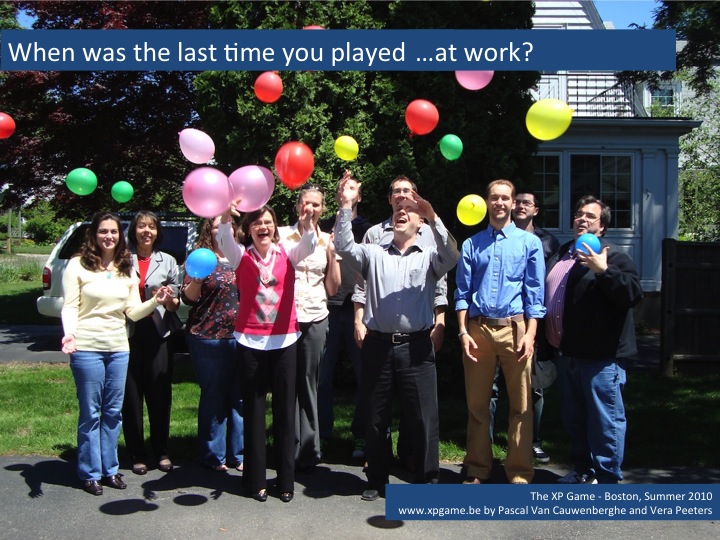
On this special day, I shall round up my Play Brigade and we shall make the most of what we have. Instead of succumbing to the notion of predestination, we shall assert free will. We will tell jokes, eat candy and play. There will be laughter and groans (unless I magically get my standup act together in time). There will be music and may be even dancing. And balloons. Yes, lots of balloons.

Wake up sleepy heads

“M is for…”

We can choose to make M stand for anything our hearts desire. For me, M stands for Materialise, Magnify and Make-Believe. It’s no coincidence that these action words often lead to my most successful work as a coach and friend.

The days of “no news is good news” are long gone. Knowing that something as terrible as Blue Monday is just around the corner gives us time to prepare. And it makes us choose. A choice between sleepwalking through 2012 or making it a song and dance for life.

What do want “M” to mean to you?

Favourite Memento in 2011

Remembering Snowbird

Remembering 2011

One of the highlights has to be my Agile Pilgrimage with Carsten Ruseng and Henrik Kniberg to Snowbird, Utah on 12 August. Snowbird has a special place in my heart because it’s where only ten years ago, a bunch of enthusiasts got together to create the Agile Manifesto that became the definitive catalyst for the way we develop software and work together as teams today.

“Look what I found in my Agile treasure trove…”

As I looked through my Agile video library collected this year, I came across a video we made during our visit to Snowbird. It’s of Henrik Kniberg sharing his story behind the Agile Manifesto Translation Programme and the impact it’s had in forming new Agile communities.

“It’s nice to see you, to see you, nice!”

The coming together of this group has shaped not just my career, but also my life, in so many ways. People, purpose and play. These three words best describe the impact of Agile on my life as a whole.

Learning about Agile has meant that I’ve met more people than I would have done otherwise and learned something from each of them. Because Agile is a tribe of tribes the diversity that comes from this community is immense and the learning intense!

“Love what you do and do what you love”

If I had to sum up Agile in two words, they’d be “Continuous Improvement”. This passion for improvement has lead to many personal failures, learnings as well as successes. It’s made me realise that it is possible not only to love what you do but take you closer to doing what you truly love. By daring to fail in order to improve, it’s helped strengthen my purpose: to be better than I was yesterday every day and help others do the same if that’s their wish.

“Play once a day to keep the doctor and priest away!”

My Agile adventure started with playing The XP Game back in 2004 and has continued with playing many more games and even creating some of my own. My take on Agile has made play a key tool for tapping into people’s potential as well as increase it with time through shared experiences.

I look forward to meeting more people through more play in 2012! It’ll be nice to see you, to see you, nice!

Gifts Fit for Kings and Queens

Give the gift of kindness

This Christmas, I’d like to share with you 4 magical gifts you can use right away.

If you wish to get more organised…

… and become more effective and efficient in 2012, you must read and try “Personal Kanban” by Jim Benson and Tonianna Demaria. It’s a light and enjoyable read that shows us why and how important it is to a) visualise our work and b) set work-in-progress limits to achieve the goals we set ourselves. You can practice by applying Personal Kanban to make more of your holidays with friends and family!

If you wish to follow your dreams…

… and dance your dance but are hesitant to do so, let Elizabeth Gilbert, author of “Eat Pray Love” guide you in this beautiful talk on the genius behind art and creativity we all secretly aspire to. Learn to externalise the anguish of creativity and get a little help from your very own daemon (think Dobby, the friendly house elf).

If you wish to help yourself…

… and your tribes live happily after, prepare for the journey of transforming your workplace into a place where you long to belong with “Tribal Leadership” by Dave Logan et al. To learn more about Tribal Leadership in action, check out my interactive workshop based on the model. Like Dave says, “Birds fly, fish school and people tribe.” Go forth and tribe – why not try out the model with your friends and family?

My special wish this Christmas is…

… for all of us to have a safe, playful and fun-filled holiday. What better time to play then during the festive season? Make a gingerbread house, build a snowman, play Lego’s latest invention “Creationary“. Practice playmaking to magick any chore (such as large amounts of washing-up) into fun and games!

Merry Christmas and a very Happy New Year!

Where the Wild Things Are

No place to work

My First Job

Working with graduates reminds me of my early working years. Many years ago, after a series of interviews, I landed myself a job working in online publishing.

Every day, I would go to work in a building shaped like a magnificent ship. Where the CTO would ride around the office on his Muji bike. Where in the kitchen were Smeg fridges filled with an infinite supply of still and sparkling bottled water. Where there was a Playstation and a pinball machine and we were encouraged to play. (”It helps to get the creative juices flowing don’t you know?” the designers would say.)

What’s more, on the top floor of the building was a bar-restaurant that bore an uncanny resemblance to the one in Ally McBeal. Those were the days during the dot.com boom.

The Way of One World

During this time, I learned a lot. That most of the “real business” got done down the pub over a beer. That if you wanted to succeed, you needed to work for a “big boss”. That some people went to work to do a good job while others did the minimum yet expected to get paid more.

Those were the days when managers would educate graduates like myself. The most memorable lesson was one from a recently- hired manager. He’d been with the company for less than 2 weeks.

“Portia,” he said. “If you want to get on in this world… The moment you get a new job is when you start looking for another!” This comment would be followed by raucous laughter from some of the crowd.

I didn’t know what to think when I heard both the advice and the laughter. My mind crowded itself with questions. How can you learn and improve if you’re constantly on the lookout for something better before you’ve acquired and developed your skills? As a manager, how much can you possibly care about the people and why would you help them grow if your mind is already somewhere else? Most important of all, how can you build something that lasts and why do it if you don’t expect to be here tomorrow?

Uneasy questions demand game-changing answers

It’s taken me a long time to reconcile my thinking and actions with the lessons I learned back then and continue to learn everyday about how organisations work.

Instead of accepting the status quo and playing the same game day in day out, recognise that we each of us have the power to change the game.

Instead of leaving behind any old legacy, let us create “inheritance” – something of value for those who come after us, an organisation that is at once prosperous and adds value to the world in which we live.

Instead of “doing deals” down the pub, let us reward people based on meritocracy – based on their performance at work; how much value they add and the amount of personal potential realised.

Instead of teetering on a knife edge performing an unsustainable balancing act of work and life, let us figure out what’s really important to us so that we can unite the two instead.

Last, but not least, instead of being caught up in the tide of commoditisation of everything we have and everything we are, let us figure us what’s for sale and what is not. Because once we realise what we have that even money cannot buy, we discover what it takes to change the game.

The Profundity of Bodypump

Christmas has come early for me this year. I know this because I’m carrying holiday weight two weeks in advance of the big day itself. That’s when I decide to step up my visits to the gym and reduce my daily intake of “Christmas-in-a-cup“.

Bloated Snowman

What’s Bodypump?

For those of you unfamiliar with Bodypump, Bodypump is weight-training en masse to pop music. In the early days, mainly only women went (something to do with it being perceived as “aerobics with weights”). Nowadays it attracts both men and women because it’s up to you how many weight plates you want to stack onto your bar. What you get out is what you put on.

Each class is made up of the usual sequence of warmup, followed by squats, then upper body training (biceps and triceps), followed by either lunges or more targeted training and finally always finishing with abs work. How good you are at crunches (and its variations) is a fair indication of how squishy/toned you really are. What they call your “core strength”.

Physical and Mental Training

Now imagine you’ve just signed up for a Bodypump class. The warmup’s gone fairly well and you’re not yet out of breath. You feel “warmed up”. Suddenly, from out of nowhere comes a steady stream of existential questions.

Booming Voice: “Why are you here?”

Voice-in-own-head: “That’s a very good question. To work out I guess. I’ve put on a bit of holiday weight and I’m hoping to work it off before the holiday binge.”

Moments later, displeased with the class’s progress or the answer, the Booming Voice poses a different question during the toughest of squat tracks.

Booming Voice: “What are you waiting for?”

Voice-in-own-head: “Another great question. It’s not an uncommon question I ask myself. I’m trying to give it my all, honest I am.”

Then a longer period of silence, leaving one more time to reflect on one’s previous answers to such wide-reaching questions confined to so stuffy and small a training room.

Finally, we get to core strength and we do the plank followed by side plank with rotations, same number of agonising reps on both sides. You have to try it to appreciate how tough it really is.

Booming Voice: “We won’t be here for long.”

Voice-in-my-own-head: “Best make the most of my time here then.”

And as the class wraps up with a cool-down, the Booming Voice leaves us with one final thought.

Booming Voice: “Well done. Good job. See you next Tuesday.”

Being a Work-in-Progress

Moments afterwards, as I get ready to return to work, I wonder how often we get asked such profound questions that truly shape our lives. And it is in searching for the answers that transforms us from who we dream of being to who we ultimately become.

Playmaking: Transforming Work Through Play

Home of Playmaking

Isn’t it time we all have more fun at work?

If your answer is “Yes!” then join us at the home of my new blog “Playmaking – Transforming Work Through Play“. Looking forward to seeing you there!

Create the Place Where You Long to Belong

Synchronised Origami

A Hundred Years of Solitude

For as long as I can remember, I’ve always yearned to find a place where would I truly belong. A place where I’d spend most of my waking hours actively participating in what I call the 3 Cs: Communication, Collaboration and Community.

Communication: A place where my finger’s always on the pulse, a place where people say what they mean and mean what they say.

Collaboration: A place where people work together, play together, win together, working towards a common goal.

Community: A place where we care about one another, look out for each other and create opportunities together.

Then one lunchtime, as I peruse the shelves of business books at my local bookstore, I stumble upon a book to help me turn my dream into reality. To create a place where I long to belong at work.

The Power of Tribes

Tribal Leadership” by Dave Logan, John King and Halee Fischer-Wright is a book based on the ancient concept of tribes. In it, they describe how organisations operate in a 5-stage model based on organisational research from numerous U.S. companies. The book is packed full of practical tips of how to “upgrade” your tribe from its current stage to the next in order to create an organisation that doesn’t merely survive, but thrives.

According to Dave and his co-authors, a tribe consists of a group of between 20 – 150 people who would stop and greet each other when their paths crossed. A small tribe (the equivalent to a small organisation) is between 20 – 50 people large, whereas a large tribe (a larger organisation) is between 50 – 150 people. The concept of “tribe” scales in that a large organisation is made up of a tribe of tribes. And what do all tribes in a single organisation have in common? Organisational culture, of course.

What Dave’s research tells us

The supporting research of Tribal Leadership is based on workplaces in America.

5 Stages of Tribal Leadership

Stage 1: A person at Stage 1 is usually alienated by the world of them. Around 2% of professionals are at this stage. People at Stage 1 take shotguns to work. Tribes at Stage 1 are reminiscent of prisons in culture.

Stage 2: A person at Stage 2 is constantly complaining, wondering “Why me?” Dave refers to this stage as the “ghetto of corporate despair. Around 25% of workplaces operate at this stage. According to the model, Dilbert is at Stage 2.

Stage 3: A person at Stage 3 is all about “Me! Me! Me!”. Knowledge is power and they hoard it and keep it for themselves. A whopping 49% of workplaces are at Stage 3.

Stage 4: Individuals and tribes are value-driven at Stage 3. Around 22% of workplaces make up Stage 4. Interesting fact: people at Stage 4 require a common enemy against whom the tribe focuses in order to be better. Reminds me of classic James Bond movies where Bond needs baddies in order to be a goodie.

Stage 5: A person at Stage 5 “makes history”. People at Stage 5 take full responsibility for their words and actions. They are driven by leadership, vision and inspiration. Around 2% of workplaces make up Stage 5. Graduates begin at Stage 5 and usually regress to lower stages.

Tribal Leadership session at XP Days Benelux

For those who know me, one of my favourite hobbies is turning theory into experiential learning to help bring the theory alive and that’s exactly what I’m trying to do with Tribal Leadership at XP Days Benelux last week.

Copycat Origami

What Dave says about the session

Dave has seen the presentation and says, “Amazing work! Would you be open to our posting this on our website? It’s really outstanding!” Having seen the pictures from the session at XP Days, Dave adds, “This is really fun! Love the pictures. Looks like you get people really involved.”

I hope you have as much fun looking through the presentation as I did in building it with help from my tribe!

Where can I find out more about Tribal Leadership?

Special Thanks!

Tribal Trade

To Dave Logan and his team for giving permission to re-use his model and snippets from the great book “Tribal Leadership”, not to mention all the really useful feedback and input to clarify the role of ego in the different stages.

To my tribe at work for playing along and giving the gift feedback. It sure helped to turn the BETA session into something much more challenging, meaningful and fun!

To the 40 participants at XP Days Benelux who took part in synchronise peace crane paperfolding and are living proof of how even perfect strangers can learn to tribe in as little time as 90 minutes. And for their gift of feedback. Looking forward to playing again next year!

Days of Old

Old Age

Sticks and Stones

Some days I feel old. I think about all the hip things the youngsters are getting into these days. Wonder if I should buy myself an iPhone and get into the whole apps-on-phone rave, replace my beloved paperbacks with Kindle versions, accept invitations from strangers on LinkedIn requesting to connect as “friends”.

That’s when I decide to take an alternative route to work. As I go past a familiar row of shops, ABBA strikes up and the music jolts me out of my reverie. Because I’m taken by surprise, I pay attention to the lyrics for the first time. “You can dance, you can jive, having the time of your life“. Sounds like wise words to me. (Go on, you know you want to play it loud and play it proud!)

The cheery tune transports me back to my first visit to Sweden a couple of weeks ago for Oredev when I rediscovered an old friend, full of colour, sound and good humour. I’m referring to ABBA of course. And all this reminds me of a niggling notion I’ve been carrying in my head for sometime and it is this: the feeling of Agile.

The Feeling of Agile

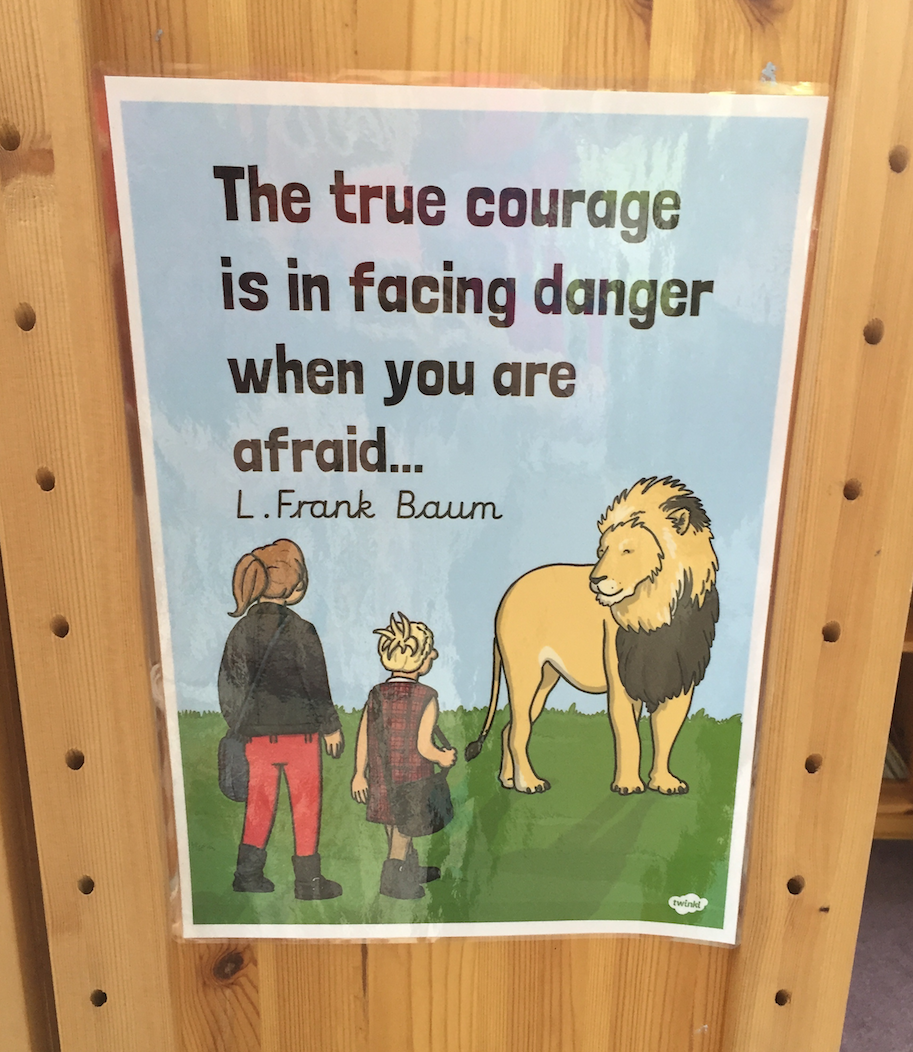
Agile to me is a catalyst for personal and organisational change, so if you practice Agile on a daily basis, then you’re bound to feel silly or foolish at least once a day. Just as 5 – 10 minutes of play a day can keep the doctor and priest away, feeling silly is a sure sign you’re out of your comfort zone. And being out of your comfort zone demands courage. It can also lead to learning and personal growth.

The meaning of silly depends on you. Why stand up in front of an entire open plan office for a 15-minute standup meeting? Why try to improve when no one else seems to care? Why invite a new team member you barely know out for lunch?

Silly Me

I reflect on yesterday and scan for signs of silly, like a first aider fingering a wrist for a pulse. Much to my relief, I remember brainstorming ice breakers for a team building session with a fellow playmaker, among other silly episodes.

“What do you recommend?” she asks. To which I reply, “What’s the goal of the session? And the success criteria?” Once these are clear, the real fun begins. “There’s “Mad, Sad, Glad” which helps ground the team by looking back at how far they’ve come and where they are now,” I say, trying to come up with a range of options.

“Then there’s “The Profile Card Exercise” (which always contains surprises like “I love the Queen and I hate mushrooms”). And my all time favourite “The Superhero” – if you were a superhero who would you be? What kind of super power would you have?” This final suggestion gets an involuntary chuckle from my colleagues who overhear the conversation.

It’s true what they say, “you’re only as old you feel”. And I’d emphasise “as young as you want to be”. Silly is the pink flamingo in your drink. Or the cricket in your pocket. Do you dare to feel silly?

XP Days Benelux: 2011 Christmas Edition

It’s that time of year again, Christmas is just around the corner, people are talking about the possibility of snow on Christmas Day and, of course, it’s almost time for XP Days Benelux, the friendliest and most fun Agile conference I know.

I’ll be presenting a brand new session about Tribal Leadership based on the book by Dave Logan, John King and Halee Fisher-Wright. I’ve had great fun experimenting with the theory, so I hope you’ll enjoy it!

5 Stages of Tribal Leadership

Tribal Leadership – Create the place where you long to belong

Do you hope that one day all the office politics will be replaced by a common and worthwhile cause? Do you wish you could be part of a winning team? Do you dream of working in a place where you belong?

Every organisation is made up of tribes, naturally occurring groups of between 20 – 150 people. And even though each tribe is different they have one thing in common: organisational culture.

Join me to learn about Tribal Leadership, a practical model for leveraging natural groups to create organisations that thrive. Learn how you can help transform your work experience into what you want it to be by focusing on language and behaviour within a culture.

You’ll get the chance to identify the stage you and your tribe are in and the next stage you want to move towards. Working in pairs, triads and as a whole group, you’ll leave the session with a roadmap of your own to take your tribe towards “Innocent Wonderment”.

Find out more about the session here.

Looking forward to the fun and games at XP Days Benelux and all the invaluable learning and sharing!